

VIP lines sound great in theory. Faster entry. Upgraded amenities. And for your event: more money.
But I’ve personally seen them go sideways in a very bad way when they aren’t planned out properly. Standby or general admission guests start to get angry when their line doesn’t seem to move at all, while hundreds of folks get admitted through the VIP line. Or, on the flip side, you run into disaster by selling too many “premium” passes and the VIP line becomes just as slow as general admission…except now everyone's paying extra to be disappointed together.
Getting this right means separating two decisions that often get lumped together: how you sell tickets (early bird, online, door sales) and how you allocate access once people arrive (general admission vs. VIP). They follow different logic, they solve different problems, and mixing them up is one of the most common planning mistakes we see.

What are VIP Tickets?
Before we dive into the numbers, let’s define what a VIP pass really means for most events. There are two different types of VIP passes that organizers typically sell:
-
Premium event access with a shorter wait or dedicated entry zone
-
Upgraded amenities inside the event, such as better seating, a dedicated bar, free food
You might even have a ticket option that combines both of these types of VIP access. But for the purposes of this guide, we’re specifically looking at the first option: premium event access with a shorter wait to enter.
How Long Should VIPs Wait in Line?
If VIP means skip-the-line priority, keep those wait times as close to zero as possible.
You could also set your goal wait times for VIP relative to your GA wait times. For example, if GA guests are typically waiting 30 minutes, then the VIP wait should be 3-6 minutes max.
One more factor I like to consider in this calculation is the type of event you’re organizing. A one-time entry music festival has very different admission procedures than a family entertainment center, a sporting event, or a regional amusement park that also comes with VIP access to every attraction.
But whatever type of event you’re hosting, VIP guests should never be waiting more than 5-10 minutes to enter your front gate.

How Many VIP Tickets Should I Sell?
The entire value of a fast lane comes from it staying meaningfully faster than the regular line, and that only works if VIP stays a clear minority of total queue volume. Here’s a safe target ratio that I think works for most events:
-
85-90% General Admission
-
10–15% VIP
Maybe that VIP percentage seems low to you, but keep in mind: once a "fast lane" creeps toward a quarter or a third of your total attendance, it stops moving meaningfully faster than GA, and now you've sold people a premium experience that doesn't feel premium.
If VIP instead means added amenities without skip-the-line priority (a private bar, better sightlines, a lounge, merch, meet-and-greets) you have much more room to run higher, because you're not competing for the same throughput at your bottleneck (the entry gate, the ride, the stage).
When Should I Start Selling VIP Tickets?
The short answer is…as early as possible. Since these tickets come at a premium, they generate more revenue for your event per ticket sold than your GA or discounted admission. You want that money as soon as possible.
I’d recommend making your VIP tickets available with your early bird sales, even if you don’t offer them at a discounted price. If guests are willing to pay for premium access, they’ll want to lock that in as soon as possible.
Here are the ratios I’d recommend:
-
25–30% Early Bird
-
50–60% Online Sales
-
10–15% At-the-Door Sales
-
Up to 5% Reserved for Comp Tickets
This breakdown helps you manage cash flow, gauge demand early enough to adjust marketing, and hold back just enough door inventory to capture last-minute buyers without risking a sellout that turns away walk-ups.
How to Handle VIP Guests at the Gate
The instinct when designing a VIP tier is to pick one ratio, say, "1 VIP guest for every 5 GA guests", and stick with it all day. But that doesn’t always work.
Some of you may already know how much of a theme park nerd I am, and I’ve studied how major theme parks like Disney and Universal handle their queue lines, including Express Passes and Lightning Lanes (RIP FastPass).
While Disney and Universal don't publish their exact formulas, cast member accounts, dedicated fan-analyst sites, and years of observed wait-time data give a pretty clear picture of how they handle it. Here's the short version, as a case study rather than the whole story.
Disney runs a tiered system at the point where its Lightning Lane (paid skip-the-line) and standby queues physically merge:
-
Normal demand: roughly a 1:4 ratio of standby to Lightning Lane guests. Let a family of four through standby, and up to 16 people get pulled from the Lightning Lane side.
-
Elevated demand: the ratio stretches to 1:14, and in some cases as steep as 20:90; standby guests get as little as 7–18% of total throughput.
-
Peak demand: ratios settle back to somewhere between 1:10 and 1:5.
Across a full day, that can put anywhere from 80–93% of a ride's total capacity into the paid line…but only when Lightning Lane demand is steady. The moment that line goes empty, cast members pull 100% from standby until another paid guest shows up. In other words: the ratio isn't a fixed allocation, it's a response to real-time demand on both sides of the line, adjusted continuously by staff with the authority to change it mid-shift.
This is a direct upgrade on the older, free FastPass+ system, which allocated 75–80% of hourly ride capacity to FastPass+ holders, a 3-to-4-to-1 advantage over standby. The shift from free to paid seems to have made Disney more disciplined about hitting the ratio, not less: when guests are paying, "the ratio felt off today" turns into a receipt-backed complaint, and that appears to have tightened enforcement.
The takeaway for event organizers: don't set a static VIP:GA ratio for your whole event. Set a range, give your gate staff or software the authority to move within it, and define clear thresholds for when to shift (e.g., "if the VIP queue empties out for more than 3 minutes, open the gate to 2 GA guests before returning to VIP priority").
For example, let’s say you’re hosting a sporting event with a set start time. Most fans typically arrive at a stadium 30-60 minutes before the game starts. You can turn the dial on your admission ratio during that time, so the VIP line stays short, and relax it when fewer fans are trying to enter all at one time.
What Happens When Something Breaks
This is the part most event organizers never plan for, and it can really ruin the VIP experience. Here’s how to make sure your guests have a good experience while keeping things simple for your staff.
-
Have a contingency plan for VIP disruptions, not just GA ones. If your VIP bar runs out of a signature cocktail or a meet-and-greet gets cut short, have a pre-planned "reroute": a comparable experience VIP guests can redirect to, the way Disney reroutes a Lightning Lane pass.
-
Decide in advance who has authority to change ratios mid-event, and under what conditions. Don't leave it to ad hoc judgment calls from whoever's nearest the gate.
-
Consider capping VIP sales outright rather than promising an uncapped experience. Universal's approach (sell out the tier instead of diluting it) protects the value of every ticket already sold.
One more practical layer, regardless of which VIP model you pick: think in terms of raw throughput, not just percentage of tickets sold. A single scanner can process roughly 220–260 guests per hour depending on credential complexity. If your VIP tier requires a more manual check-in (name lookup, wristband fitting, ID verification), budget separately staffed lanes rather than assuming the same throughput as GA…otherwise your "premium" line bottlenecks on process, not ratio.
Making VIPs Feel Special Without Making GA Feel Cheated
This is where the psychology research is more useful than any specific ratio. David Maister's classic Psychology of Waiting Lines work, still the foundational text on this topic, offers a few principles that map directly onto skip-the-line design:
1. Fairness has to be actively managed, it's not automatic. A customer's sense of what's equitable isn't always obvious to the operator, and priority systems only hold up if they match the customer's own sense of fairness, or if the operator actively makes the case for why the rule is reasonable. Translation: if you're going to let VIPs skip the line, say so, clear signage, an announcement, something that frames it as a known and legitimate rule rather than a guest with connections cutting in front of everyone.
2. Physically separate the two lines wherever possible. Many service businesses go out of their way to keep premium and standard customers physically apart (first-class check-in counters away from the main terminal line is the classic example) specifically so the standard customer isn't watching the special treatment happen in real time. Disney and Universal both do this almost perfectly: separate queues that only merge briefly right at the ride entrance. If your VIP line and GA line are visible to each other for their entire length, you're creating far more resentment than the ratio itself would.
3. Wait tolerance scales with perceived value, so build the perception. Tolerance for waiting depends heavily on how valuable people believe the thing at the end of the line actually is. This cuts both ways: GA guests will tolerate a longer wait for a headliner act than a minor one, and VIP guests need their line to feel proportionally faster (not just technically faster) to feel like the upgrade was worth it.
4. Perceived wait time matters more than actual wait time. Some more recent synthesis of this research suggests perceived wait…not actual clock time…is the dominant driver of how satisfied someone is with their queue experience, and that visible, verifiable ordering (posted wait times, position indicators, real-time updates) reduces the anger that comes from feeling skipped over. This is likely why Disney posts wait times at every standby entrance even though that line is actively being "cut into" by Lightning Lane traffic; it keeps the process legible, which matters more to GA guests than the raw minutes.
Practical Takeaways for Your Event
-
Separate physically, not just administratively. Different lanes, different sightlines if you can manage it, not a single line with a "VIP" sign partway down it.
-
Cap the VIP tier and communicate that it's capped. Scarcity protects the value of the tier and gives you a real answer when GA guests ask "why do they get to skip?"
-
Post GA wait times, even if they're long. An honest, visible wait time reduces perceived unfairness more than a hidden or unpredictable one does.
-
Build a VIP contingency plan, not just a GA one, reroute broken promises the way Disney reroutes a Lightning Lane pass after a ride closure.
-
Don't set a single fixed ratio. Set a range, define the triggers for moving within it, and give staff clear authority to act on those triggers in real time.
-
Match your ratio to your VIP tier size, not the other way around…a bloated VIP tier is a GA problem in disguise.

The Right Platform Makes This Easier
None of the above matters much if your ticketing system can't actually execute it: sales-channel tiers, access tiers, and real-time queue adjustments all need to be things your platform supports on day one, not workarounds you build with wristband colors and a clipboard.
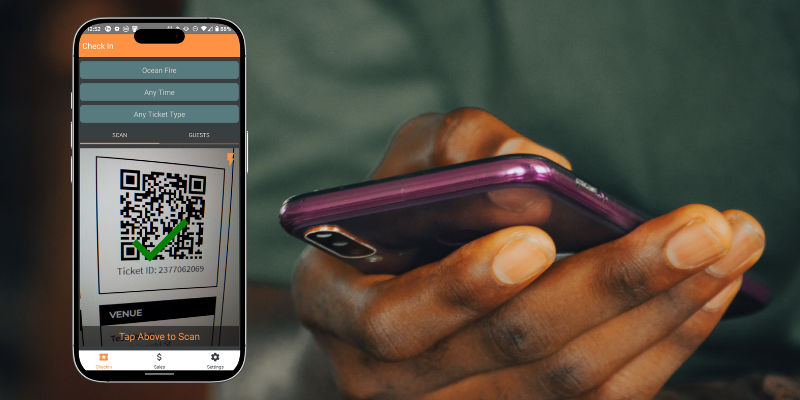
This is where Passage comes in. Passage's all-in-one box office platform is built to handle exactly this kind of tiered event flow: flexible ticket tiers so you can run separate sales-channel and access-tier structures without fighting your own software, virtual queue and mobile check-in tools to keep GA and VIP lines physically and digitally distinct, and timed ticketing to give you real control over pacing and capacity throughout the day. On-site sales run through the same system with no extra service fees, so your at-the-door tier doesn't create a second, disconnected process on event day. And lightning-fast scanning that can validate a guest ticket in 0.2 seconds flat.
Just as important: Passage's team works with you on setup rather than handing you a template, which matters a lot when you're designing something as event-specific as a dynamic VIP ratio: the range you need for a 500-person conference looks nothing like the range for a 20,000-person festival, and it helps to have people who've seen both.
If you're planning your ticket tiers and queue strategy for an upcoming event, schedule a call with one of our event experts. We’ll set everything up for you!